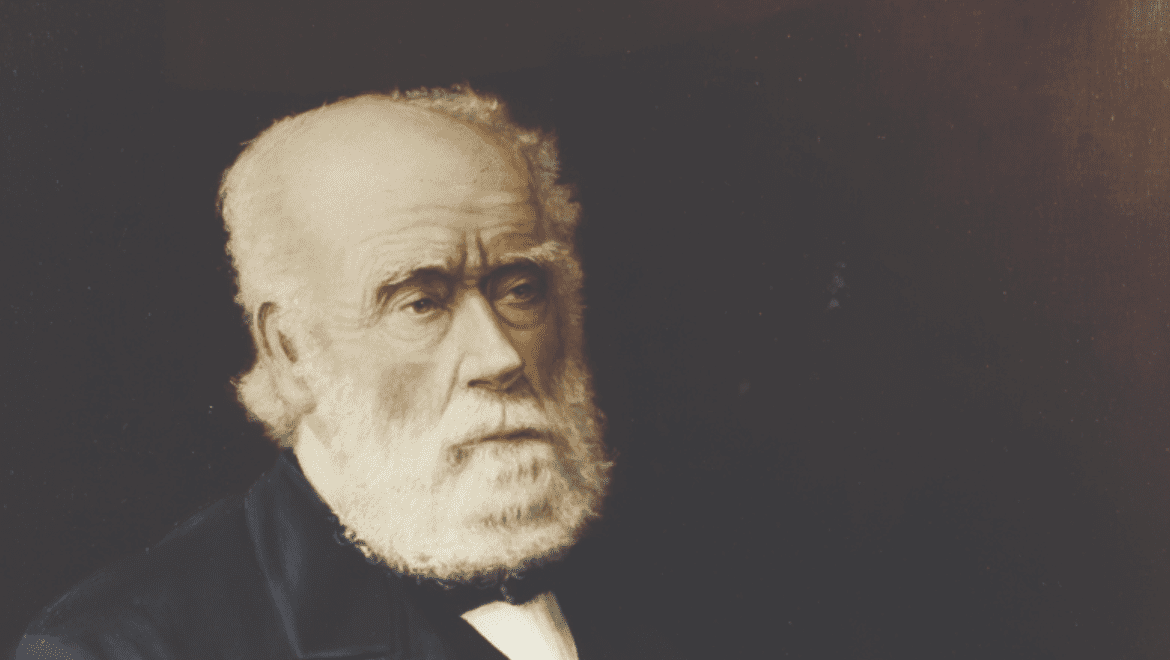

Manchester is home to many renowned scientists and inventors, and among them, Joseph Whitworth holds a significant place. Although not as widely known as some other figures, Whitworth’s contributions to firearms development left a lasting impact on weapons technology worldwide. He is credited with creating an early version of the sniper rifle. Read more at imanchester.info.
Born to Be an Engineer
Joseph Whitworth’s story begins in 1803 in Stockport, near Manchester, where he was born into the family of a teacher and Congregational minister. From a young age, Whitworth was fascinated by machinery and everything related to it. His curiosity about how things worked drove him to study every detail of mechanical systems.
After completing his education in Idle, he began honing his engineering and mechanical skills by working for his uncle, Joseph Hulse, a successful cotton spinner in the region. Whitworth joined his uncle’s factory, “Amber Mill,” in Derbyshire. Impressed by his intelligence and resourcefulness, his uncle envisioned making him a partner in the business.
Whitworth, however, was captivated by the workings of the mill. He was deeply intrigued by the machinery’s design, mechanisms, and principles. Despite having no formal experience, Whitworth quickly grasped the basics of working in the cotton industry. At the same time, he noticed the factory’s low standards of precision, which made him critical of the equipment. His aspirations went beyond merely understanding the mills—he sought to create machinery with superior accuracy.
Whitworth devoted four years of his life to “Amber Mill” before moving to Manchester, where he briefly worked as a mechanic in a local factory. His journey then led him to London, where he met notable figures like Henry Maudslay, the inventor of the screw-cutting lathe, and James Nasmyth, the inventor of the steam hammer.
Whitworth’s Innovations
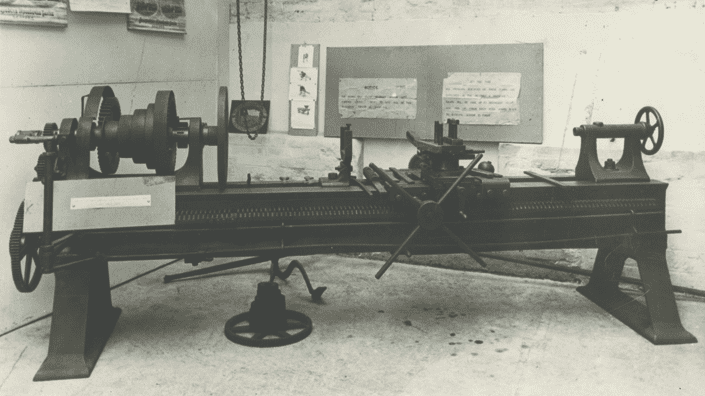
In London, Whitworth gained invaluable engineering experience while working for Maudslay. Together, they developed various precision machines, including an innovative design for casting box iron machine frames that enhanced rigidity and reduced weight.
Whitworth also worked for Holtzapffel & Co., a London-based manufacturer of lathes for decorative woodturning. Additionally, he collaborated with prominent British engineer Joseph Clement, assisting in constructing Charles Babbage’s Difference Engine—a mechanical calculator designed for tabulating polynomial functions.
Armed with knowledge and experience, Whitworth returned to Manchester in 1833. He established his own business specializing in manufacturing lathes and other precision machinery. Quality and accuracy were central to his manufacturing process, which quickly gained him recognition.
One of Whitworth’s most notable contributions to engineering was the 1841 development of the British Standard Whitworth, a standardized thread for screws. This innovation laid the foundation for globally recognized standards in screw threading.
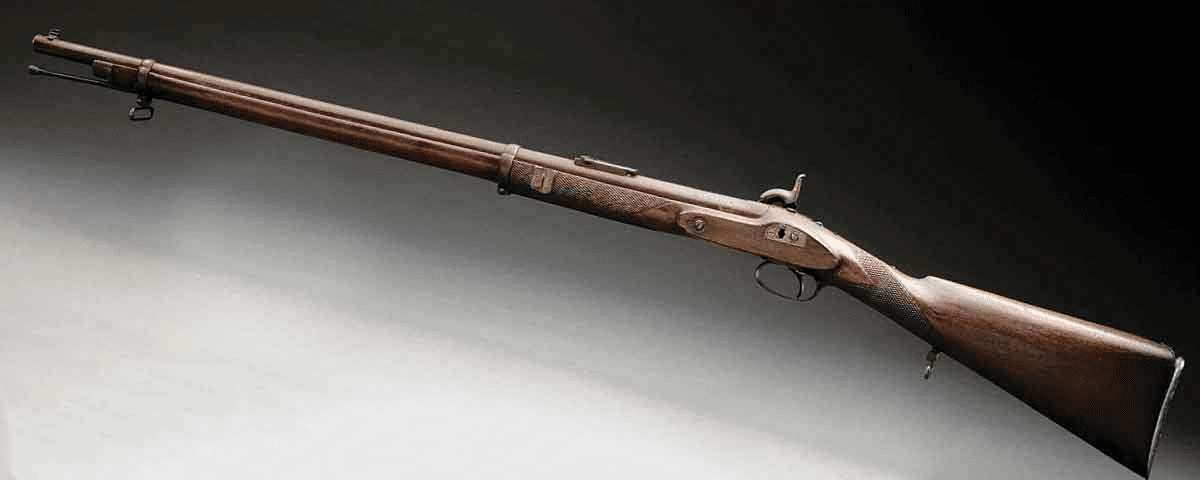
Whitworth is also celebrated for creating the Whitworth rifle, considered the first sniper rifle. This single-shot muzzle-loading rifle was renowned in the 19th century for its exceptional long-range accuracy, particularly when equipped with an optical sight. The Whitworth rifle gained notoriety during the American Civil War, where it was used by Confederate forces.
Recognition, Awards, and Philanthropy
Throughout his life, Whitworth received numerous accolades for his groundbreaking contributions. He was not only a talented engineer and innovator but also a generous philanthropist. Whitworth donated extensively to various causes in Manchester and other parts of Britain. For instance, he arranged the transportation of four one-ton stone blocks from the Darley Dale quarry for the lion enclosures at St. George’s Hall in Liverpool.
Whitworth was deeply committed to advancing technical education. He invested significant resources in developing educational initiatives in Manchester, supporting the Mechanics’ Institute and helping establish a school of design in the city. In 1868, he founded the Whitworth Scholarship to promote mechanical engineering in Britain. That same year, he donated £128,000 to the government to strengthen the connection between science and industry.
A Legacy of Innovation
Whitworth’s contributions to engineering, technology, and Manchester’s development solidified his place as a key figure in the city’s history. His groundbreaking inventions and commitment to precision engineering paved the way for significant technological advancements.
Joseph Whitworth passed away at the age of 83 in Monte Carlo, where he often traveled from Manchester to recover his health. He died in 1887, leaving behind a legacy of innovation and philanthropy that continues to inspire.