
Manchester is a city forged in the heat of the Industrial Revolution, evolving into one of the most significant hubs of industrial, cultural, and social development in the UK. Once known as “Cottonopolis”, this textile powerhouse transformed into an industrial giant during the 18th and 19th centuries.
Today, the city’s skyline is a striking fusion of past and present, ranging from ancient mills to Neo-Gothic masterpieces. These are not merely buildings; they are testaments to economic surges, social shifts, and creative rebirth. You can read more about Manchester’s architecture and cultural attractions at imanchester.
Industrial Heritage
The wealth of industrial Manchester is reflected in its architectural diversity, making the city a veritable open-air museum featuring styles from Greek Classicism to towering steel structures. The city’s architecture is inextricably linked to its industrial legacy, evident in the colossal production facilities, warehouses, railway stations, cotton mills, and canals—remnants of a bygone commercial epicentre.
A defining symbol of this era is the Manchester Central Convention Complex (formerly the Central Railway Station). Opened in 1880, the station served intense passenger traffic during its heyday. Its vast wrought-iron arched roof stands as a masterpiece of railway engineering and remains the second-widest unsupported iron arch in Great Britain.
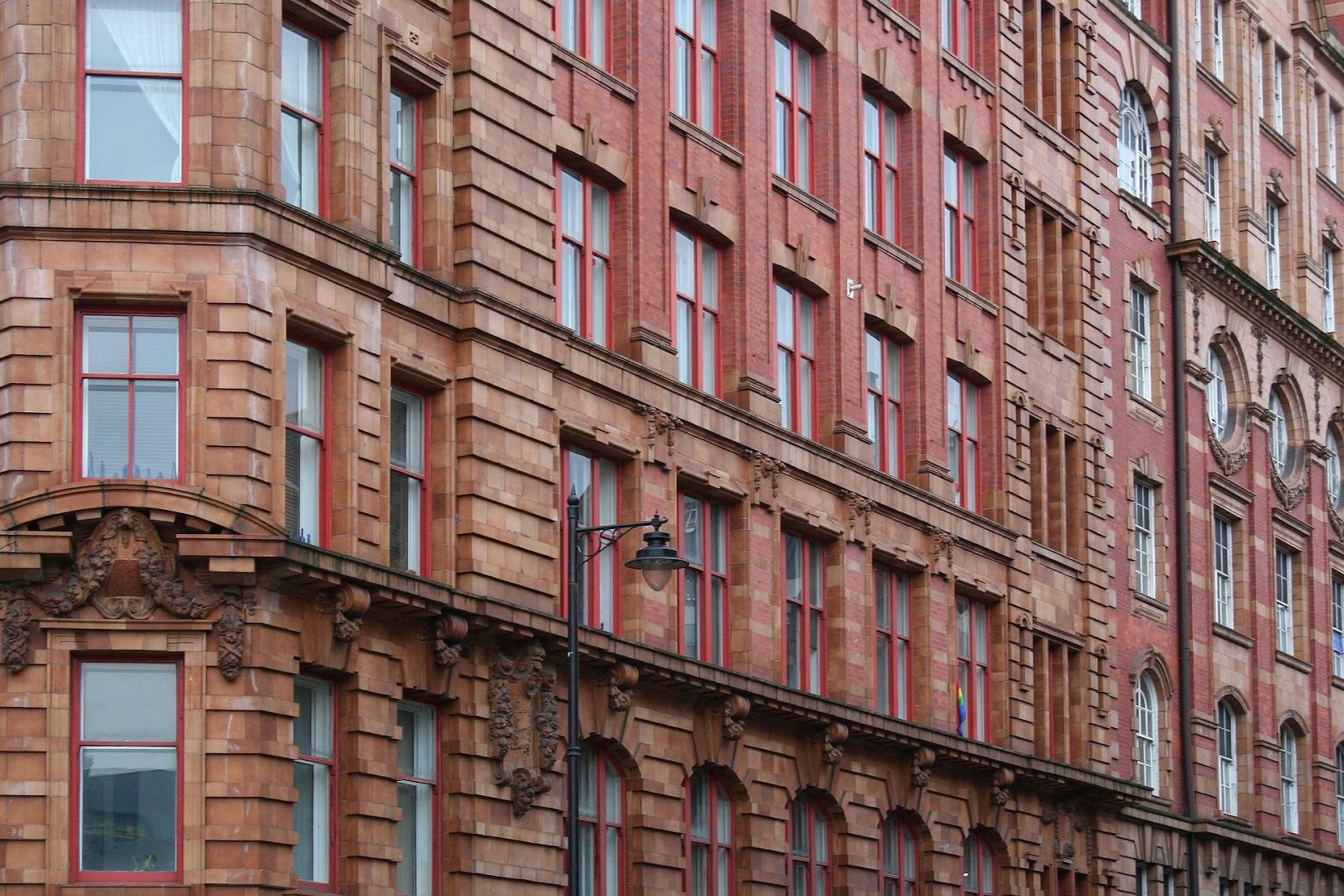
The Ancoats district was the world’s first industrial suburb, home to mills and warehouses. Manchester retains one of the oldest examples, Murray’s Mills (1788–1801), while Sedgwick Mill (1818–1820) is renowned locally as the region’s oldest fireproof mill featuring a cast-iron frame. These majestic red-brick structures, with their iron frames and fire-resistant designs, became symbols of technological breakthrough.
The scene was completed by canals and railways. The Bridgewater Canal was the first modern canal in Britain, and the Liverpool and Manchester Railway was the first inter-city line. In the Castlefield district, the Liverpool Road Station—the oldest surviving railway station in the world—has become a heritage park. Although industry declined by the 20th century, leaving behind derelict sites, these areas remain powerful reminders of the city’s working-class history and commercial might.
Cultural Landmarks
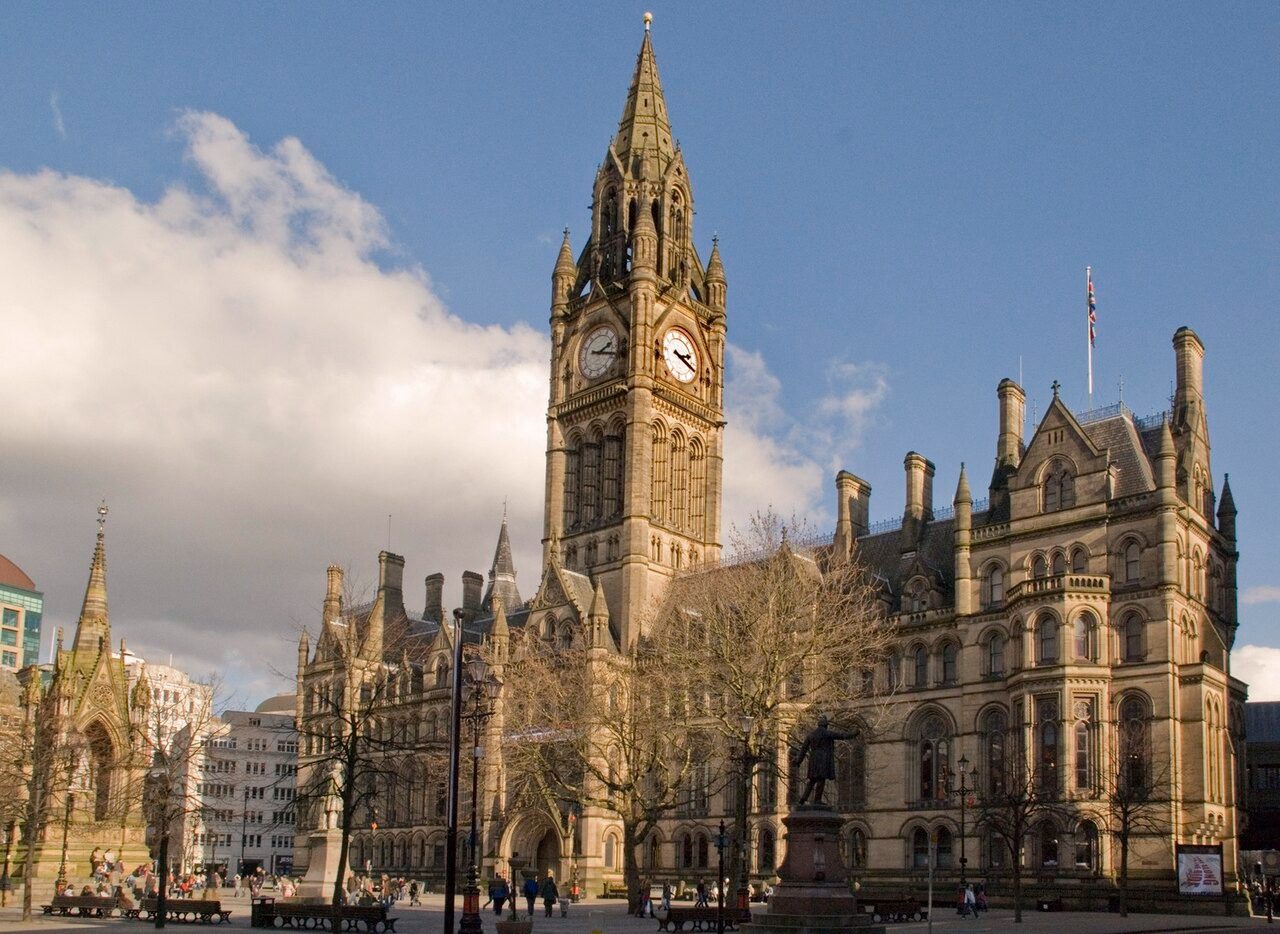
The most striking example of monumental architecture is undoubtedly the Manchester Town Hall. Built between 1868 and 1877, it is considered one of the finest interpretations of Neo-Gothic architecture and is a Grade I listed building. It is currently undergoing a massive renovation costing £328.3 million, meaning the interior is temporarily closed to the public. However, once reopened, tourists must see it to admire the 85-metre clock tower.
Locals and visitors alike are equally awestruck by the John Rylands Library. This Gothic structure, designed by architect Basil Champneys, opened to the public on 1 January 1900. It is widely regarded as one of the finest examples of Neo-Gothic architecture in Europe, housing over 250,000 printed volumes and one of the UK’s largest collections of manuscripts and archives.
Another Grade II listed gem is The Principal Manchester. Historically known as the Refuge Building, this red brick and terracotta structure opened in 1895. Designed and built for the Refuge Assurance Company, it was converted into the Palace Hotel in 1996 following a £7 million refurbishment, and rebranded as The Principal Manchester in 2016.
One simply cannot overlook the architecture of The Old Wellington Inn, built in 1552. It is the oldest building of its kind in Manchester and the birthplace of the poet John Byrom in 1692. By 1830, it was the Vintners Arms, becoming the Wellington Inn in 1865. Remarkable redevelopment efforts saw the building dismantled and moved 300 metres towards Manchester Cathedral to preserve it.
Modern Modernism
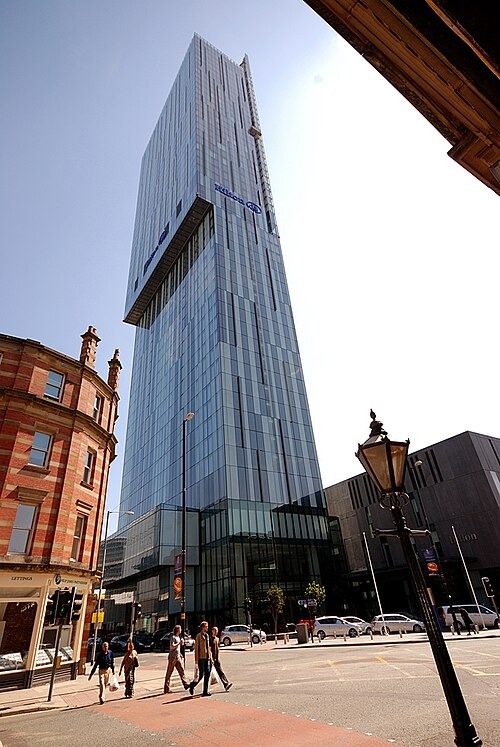
Manchester is not defined solely by historical buildings; it boasts a thriving contemporary architectural landscape where new technologies are actively integrated into the urban fabric. A famous symbol of this modernity is Beetham Tower. This 47-storey skyscraper, with its transparent glass façade, is a beacon of modern design. It is considered one of the slenderest skyscrapers in the world, with a height-to-width ratio of 10:1 on its east-west façade. A four-metre cantilever marks the transition between the hotel and residential levels. On a clear day, the tower is visible from ten English counties.
Similarly, the previously neglected district of Ancoats has been revitalised through grants since 1998. Today, it offers creative spaces, offices, and apartments that attract both tourists and businesses. The area has become a highly desirable place to live, successfully preserving innovative buildings alongside historic ones.
Ultimately, Manchester’s architectural heritage is not just about ancient stones, but about the progression of technological process. From Gothic structures to modern skyscrapers, the city preserves its past while actively moving forward, making it a unique destination for living and travel.
Sources used:
https://www.britannica.com/place/Manchester-England/Architecture-and-the-face-of-the-city
https://www.manchester.gov.uk/info/511/conservation_areas/1216/ancoats_conservation_area/3