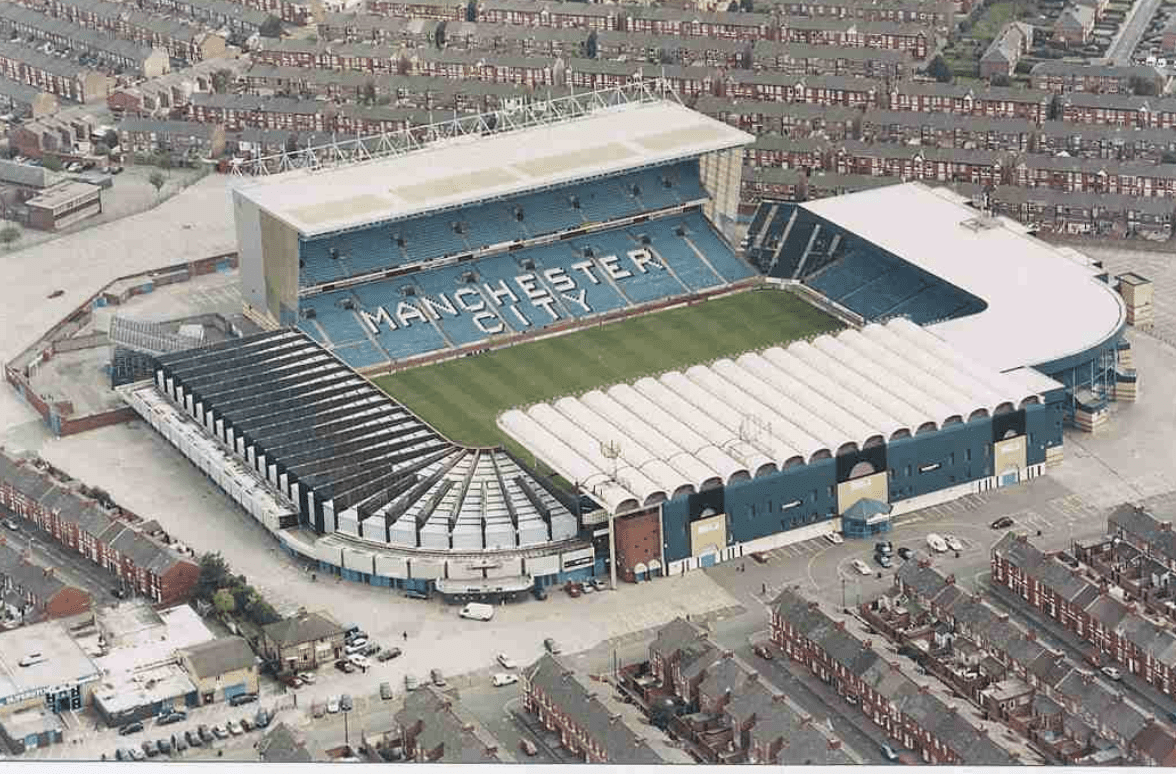

For many generations of Manchester City supporters, Maine Road was more than just a stadium; it played a crucial part in the history of the football club’s development and the growth of football in Manchester as a whole. Read more on imanchester.info.
Furthermore, it’s worth noting that the ground hosted more than just club matches: FA Cup semi-finals, England international fixtures, charity matches, and even concerts and political rallies. Every Saturday, the streets around the stadium became incredibly vibrant. Crowds of fans sported blue scarves and caps in support of their beloved club. And the chants that echoed from the stands became part of the identity of the entire area.
The Story of its Creation
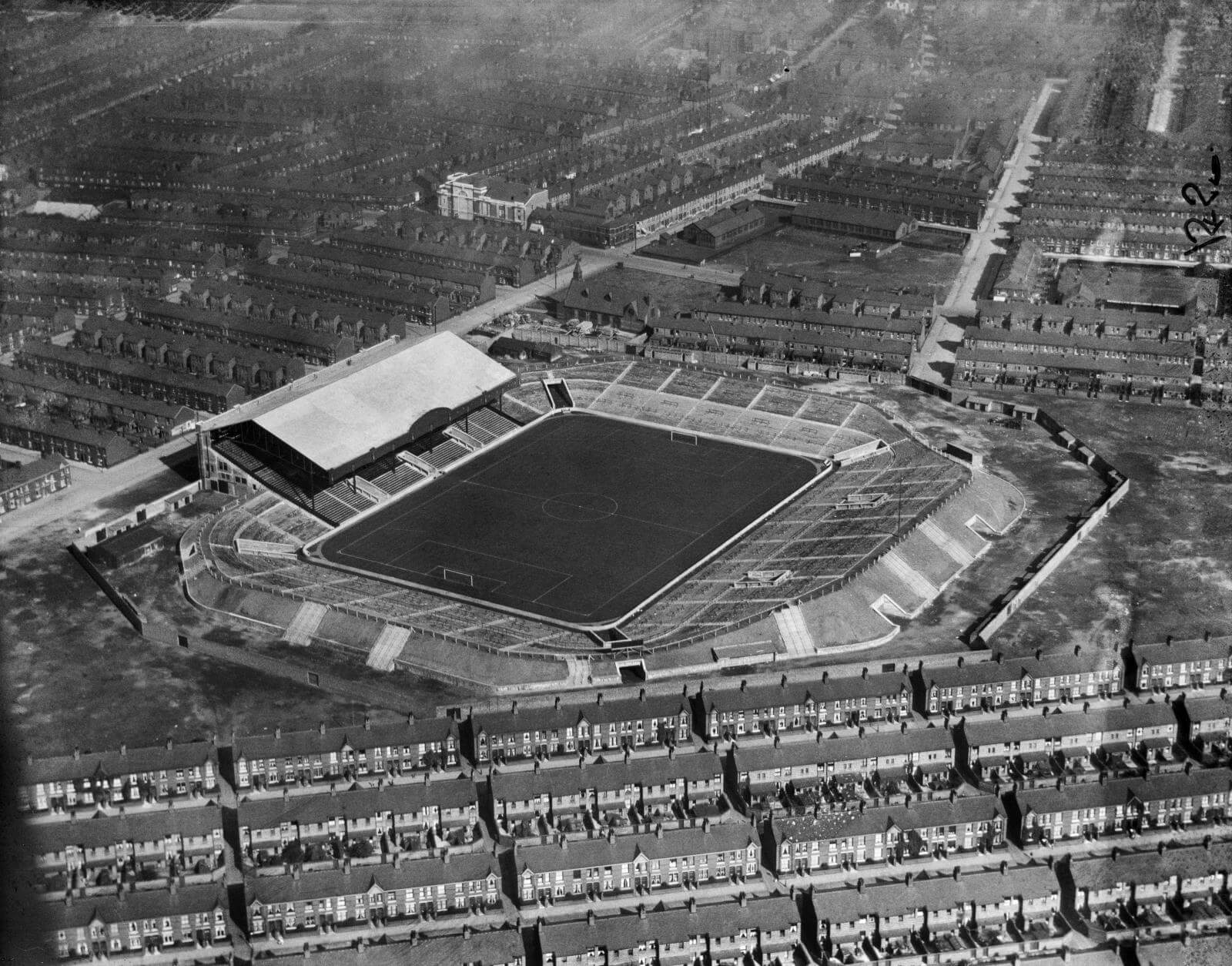
In May 1922, the board of Manchester City, a team that had existed since 1880, announced plans to build a new stadium, Maine Road. The reason was the decision to leave their Hyde Road ground, which could no longer meet the club’s ambitions: the site did not allow for stand expansion, and the main stand had been severely damaged in a fire in 1920.
Initially, two options were considered in the Belle Vue area, in the east of Manchester. For many supporters, this seemed like the ideal choice — the eastern part of the city was considered the team’s spiritual home. However, both plots of land proved too small, at only about 8 acres (32,000 m²), and the lease was offered for just 50 years. For a club with long-term plans, these terms were unacceptable.
Ultimately, the choice fell on Moss Side, an area in south Manchester. This decision was backed by the team manager, Ernest Mangnall, who was convinced that the new stadium had to be larger and more modern than Hyde Road. Maine Road was intended to hold more spectators, have better infrastructure, and pave the way for the club to reach new sporting and financial heights.
However, the move provoked a mixed reaction among supporters. A section of fans, accustomed to the eastern part of the city, saw this as a betrayal of their roots. Not everyone agreed with the board’s direction: club director John Ayrton, dissatisfied with the choice of location, left the board of directors at the end of the decade. What’s more, he became one of the founders of a new club, Manchester Central, which was based in Belle Vue and played at a stadium of the same name.
Thus, the decision to build Maine Road was not just an architectural or sporting step — it determined the future destiny of Manchester City and influenced the development of football throughout Manchester.
Construction and the Gypsy’s Curse
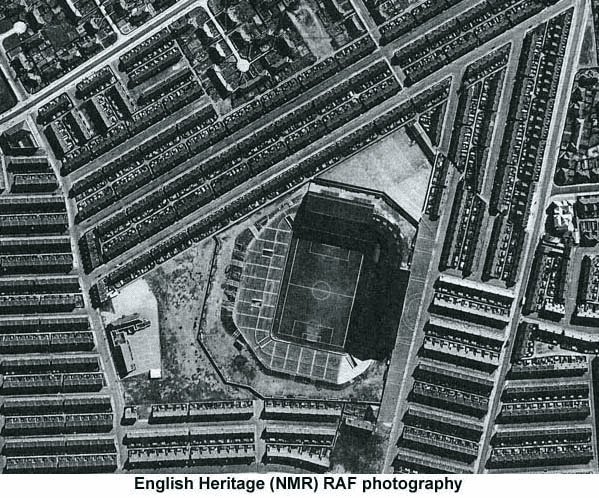
The construction of Maine Road began on the site of a former brickworks covering 16.25 acres, which the club purchased for £5,500. Back in the 19th century, this road was called Dog Kennel Lane, but in the 1870s it was renamed Maine Road — in honour of the Maine law in the US, which prohibited the sale of alcohol. This name came at the initiative of the local temperance movement, which owned the land.
From the very beginning, the stadium was shrouded in legend. According to rumours, it was cursed during construction by gypsies who were evicted from the site. Stories circulated that the “curse” was only lifted in 1998, but most football historians consider this a myth — similar tales are associated with other stadiums across England.
The construction of the stadium took only 300 days and cost £100,000 — a huge sum at the time. The design was conceived to accommodate a rapidly growing army of fans: a covered Main Stand for 10,000 spectators and open terraces on the other three sides. The corners of the stadium were connected by gentle curves, giving the arena a complete and harmonious look.
Maine Road immediately became a symbol of Manchester City’s ambitions — modern, spacious, and designed for future expansion. It was built not just as a venue for matches, but as a home for the club and its supporters.
The First Match and Record Attendance
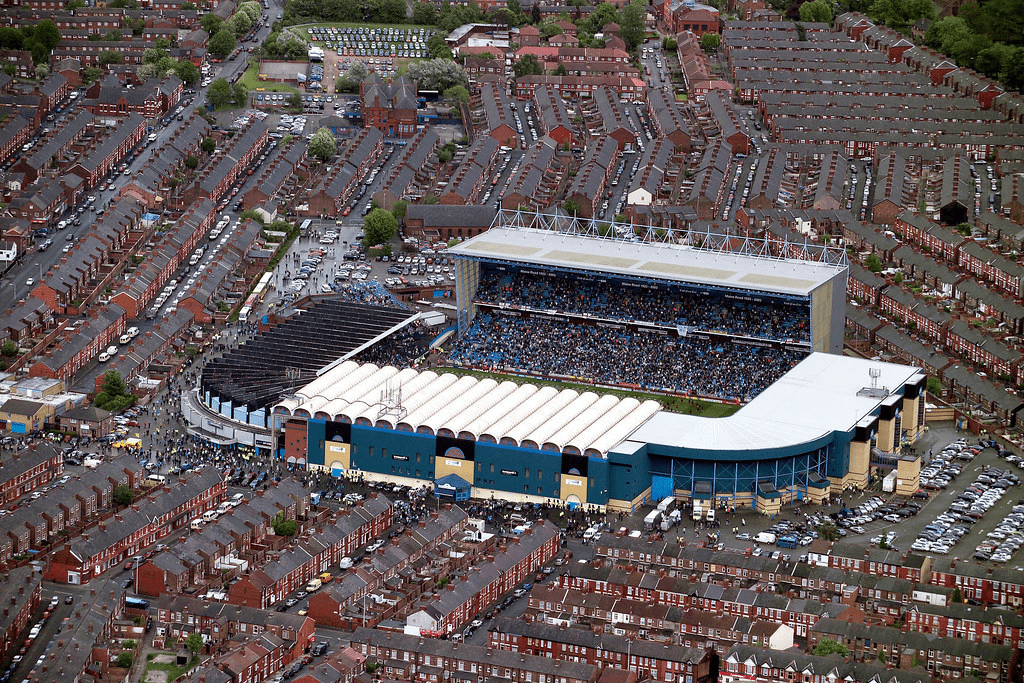
The first match at Maine Road took place in 1923. Over 58,000 spectators gathered in the stands to watch Manchester City defeat Sheffield United 2-1. By 1931, the stadium underwent its first modernisation — a roof was added over the corner between the Main Stand and the south Platt Lane Stand. This marked the beginning of a series of redevelopments that would accompany the stadium throughout its history.
In 1934, Maine Road set a historic record: over 84,000 people witnessed the 6th round FA Cup match against Stoke City. Queues formed four hours before kick-off, and the turnstiles were closed long before the match started. Manchester City won 1-0, and this result went down in club history as the record attendance for a home game at their own stadium.
In 1935, the south Platt Lane side was completely redeveloped: expanded terraces and new stands brought Maine Road’s capacity to a peak of 88,000. However, further plans were frozen — first due to the club’s relegation from the First Division in 1938, and then because of the outbreak of the Second World War. Furthermore, during the Second World War, the stadium was damaged by German bombing during the Manchester Blitz.
Post-War Development
In 1953, the first floodlights were installed at Maine Road, and a new phase of modernisation began in 1957. The catalyst was the hosting of two consecutive FA Cup semi-finals. The side facing the Main Stand was completely rebuilt. In the following years, this stand became the heart of fan life — it was here that the loudest and most dedicated Manchester City supporters gathered.
The next major update occurred in the 1970s: the modern North Stand with its cantilever roof was built, which remained until the stadium’s closure. In the 1980s, the board developed an ambitious plan for a large-scale redevelopment, but financial difficulties forced the project to be postponed. The only significant change during that period was the replacement of the Main Stand’s roof, which cost the club £1 million.
But by the 1990s, Maine Road faced the need for a complete overhaul. Some changes were made. Notably, the Platt Lane Stand was demolished, and in its place came the modern Umbro Stand, complete with comfortable executive boxes.
The era of standing terraces ended in May 1994 with the demolition of the unique side terrace, which had a capacity of 18,300. In its place, a three-tiered modern stand for almost 14,000 spectators was built, completed in 1995 at a cost of £16 million. This became the largest purpose-built stand in the country.
The redevelopment of the Kippax was intended to increase the total capacity to 45,024. However, the club abandoned further expansion after being relegated from the Premier League in 1996 and subsequently dropping from the First Division in 1998.
The new stand became a symbol of modernisation — contemporary, comfortable, and spacious, but it also highlighted the chaotic nature of the stadium’s redevelopment: each side had a different height and structural design. The full potential of Maine Road was never realised, although expansion plans remained on the drawing board until the mid-1990s.
But soon, plans to expand Maine Road were cancelled following the club’s decision to move to the new City of Manchester Stadium, built for the 2002 Commonwealth Games.
The last official match at Maine Road was played in 2003 against Southampton. Tickets were sold for over £250, and 34,957 spectators gathered in the stands — almost a full capacity crowd. Manchester City lost 0-1.
Thus, the closure of Maine Road was the end of an era: the stadium went down in history as a legend of English football, leaving behind memories of records, supporters, and remarkable matches, while its artefacts became part of Manchester’s cultural heritage.
- https://www.reddit.com/r/MCFC/comments/bnabg5/16_years_ago_today_we_played_our_last_game_at/
- https://heritagecalling.com/2022/05/19/12-lost-english-football-grounds/
- https://www.mancity.com/news/mens/man-city-maine-road-farewell-63724784
- https://manchesterhistory.net/manchester/gone/maineroad.html
- https://www.flickr.com/photos/gmpolice1/7485796950