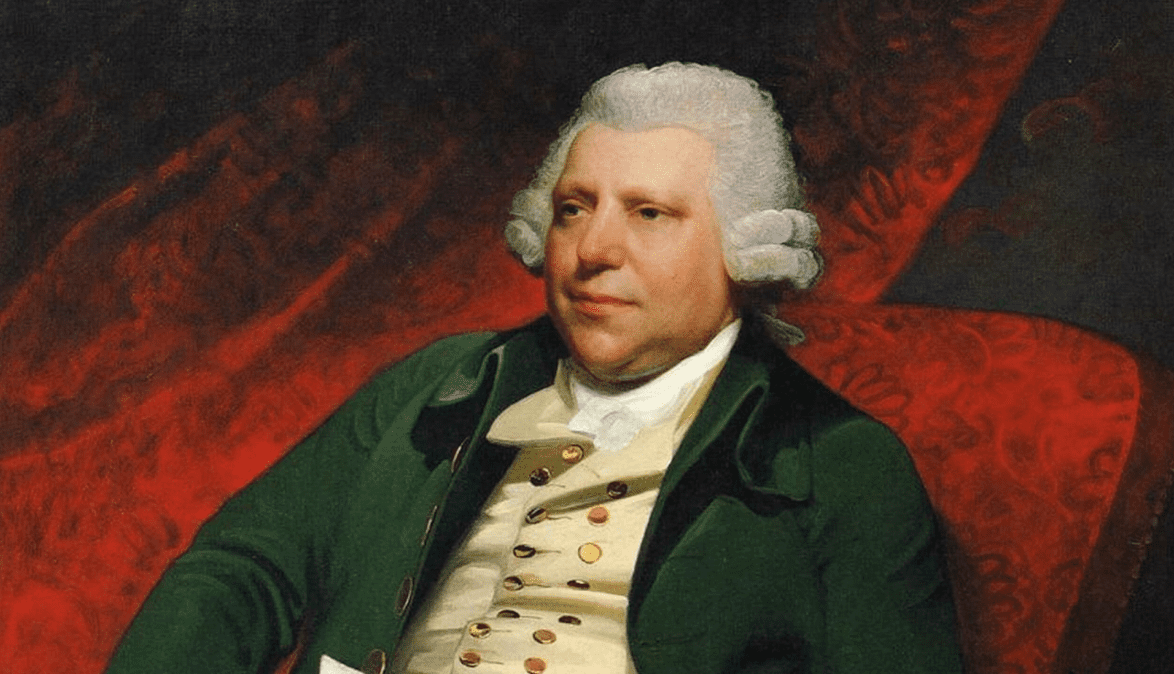

Manchester is an industrial city and the centre of industrialization in Great Britain. Many geniuses, scientists, doctors as well as prominent political and public figures were born here. No less important place in the history of Manchester is occupied by inventors and innovators. One of them is Richard Arkwright, a key figure in Manchester’s Industrial Revolution. He is credited with inventing the water frame, a revolutionary spinning frame that transformed the city’s entire textile industry in the 18th century. Learn more at imanchester.info.
What is known about the Manchester innovator?
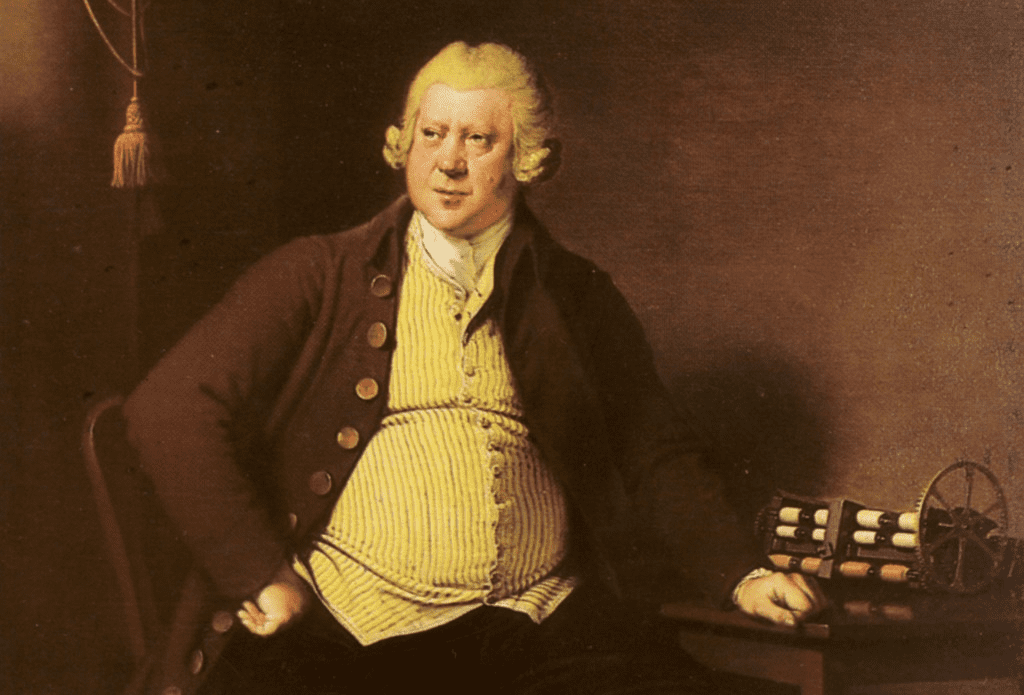
Richard Arkwright was born in Lancashire, which is not far from Manchester, in 1732. Even though 18th-century Lancashire was an industrial county, where the cotton trade developed at a rapid pace and every other was a merchant, Richard’s family had financial difficulties and couldn’t even afford to send the boy to school. Therefore, Richard spent all his childhood and youth at home, where his cousin taught him grammar, writing and reading.
When Richard grew up, he was sent to the nearby town of Kirkham, where he was apprenticed to barber Mr Nicholson. He was a master of hairdressing and a famous wig manufacturer in the region. He passed on all his experience to Richard.
After that, Richard moved to Churchgate in Bolton in the 1760s and opened his own shop.
Despite the fact that the boy was from a poor family that couldn’t even afford his education, Richard managed to realise himself thanks to his curiosity, thirst for knowledge and hard work. Throughout his youth, he always sought to learn something new and innovative. Thus, while engaged in the hairdressing business, he decided to bring something new to it. In particular, while working in his shop in Bolton, Richard invented a waterproof dye for wigs, which were fashionable at the time. At the same time, he saved all the income he received selling waterproof dye to invest in another innovation, a prototype spinning frame.
Development of a water frame
Richard’s innovative textile development was closely related to his wife, or rather the tragedy that befell her. In 1755, Richard met beautiful Patience Holt, whom he immediately married. In the same year, the couple had their first child, Richard Arkwright Junior, but, unfortunately, the baby died at birth. Richard’s wife died in 1756 too. Thus, Richard became a widower at the age of 24. He was confused and heartbroken. Apparently, the salvation from this excruciating pain was his idea of developing a carding engine and spinning frame that would replace human manual labour in processing raw cotton into thread for weaving. Richard plunged headlong into the realisation of this idea immediately after the death of his first wife. His second wife was Margaret Biggins, whom he married in 1761.
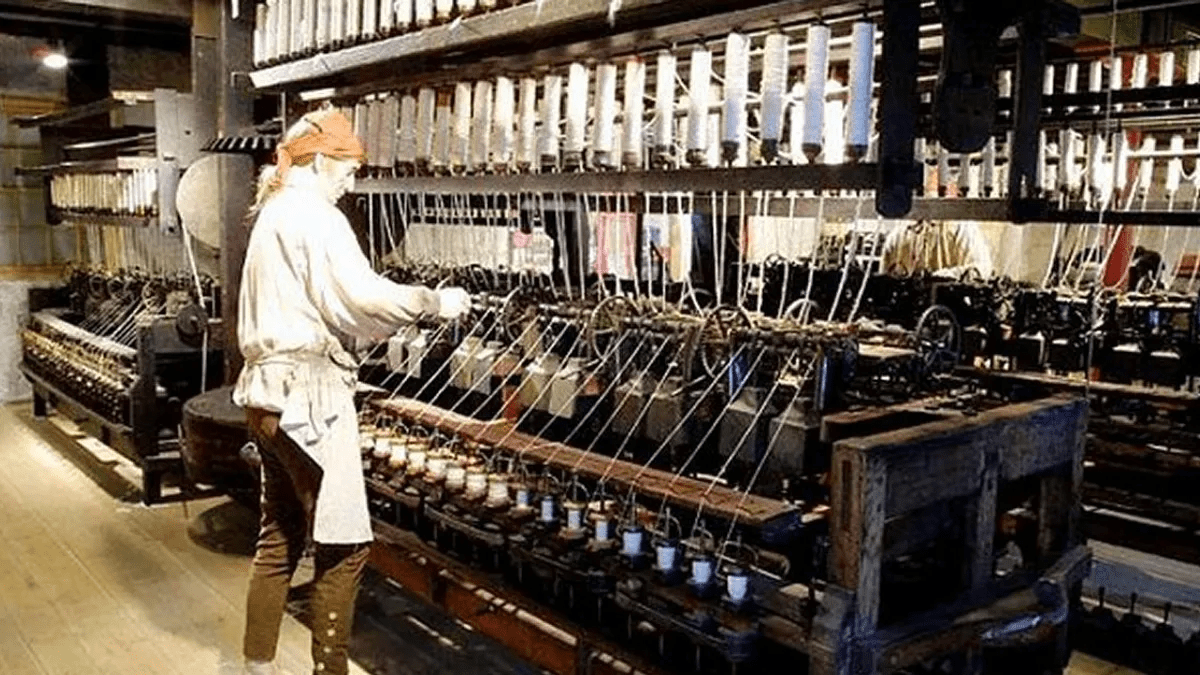
The development of an innovative spinning frame in the 18th century took a lot of time. The process was complicated and quite time-consuming. Only in 1769, did Richard manage to patent his invention. It was a machine that made twisted threads, using wooden and metal cylinders that replaced human hands. At first, Richard’s spinning frame was powered by horsepower. This innovation significantly reduced the cost of cotton production at the end of the 18th century, which led to global changes in the textile industry of the entire region, especially Manchester.
Another innovation that Richard introduced to the textile industry was the carding engine. It should be noted that such a device already existed at that time, Richard only improved and patented it in 1775. In particular, this machine turned raw cotton into a continuous skein for spinning. Simply put, with Richard’s improved carding engine, a cotton thread could be made fine and strong enough to be used to warp threads.
However, inventions weren’t so easy in the 18th century. In order to strengthen your position in the innovation market, it was necessary to patent your inventions. Thus, in 1775, Richard received the grand patent, which strengthened his position in the rapidly growing cotton industry as well as among numerous imitative competitors.
Further fate of the innovator
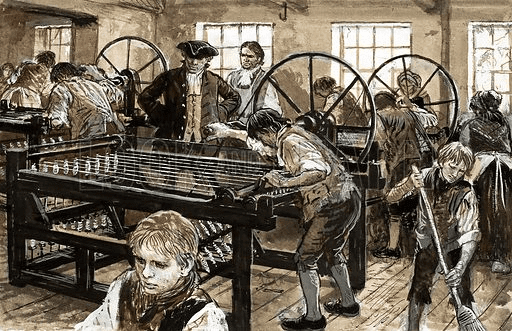
After obtaining patents for his inventions, Richard tried to develop the textile industry in Manchester and its region in different ways. So, in the late 1770s, he founded a mill in Cromford. Richard also leased a mill in Lancashire. He sought to turn the region into one of the most important and industrially developed in Great Britain. In 1777, Richard leased another mill in Wirksworth, where he installed the first steam engine. Richard’s activities were known not only in England but also in other parts of the United Kingdom. He was even invited to Scotland to help develop the region and set up innovative cotton mills in New Lanark.
Richard was devoted to his work until the last day of his life. After returning from Scotland, he settled in Manchester, where he continued to develop the textile industry and build factories. The heart of the outstanding innovator of Manchester’s textile industry stopped beating in 1792. Richard was only 59 years old. Arkwright’s legacy was not only his inventions and innovative approach to yarn production but also the £500,000 he earned thanks to his farsighted ideas.