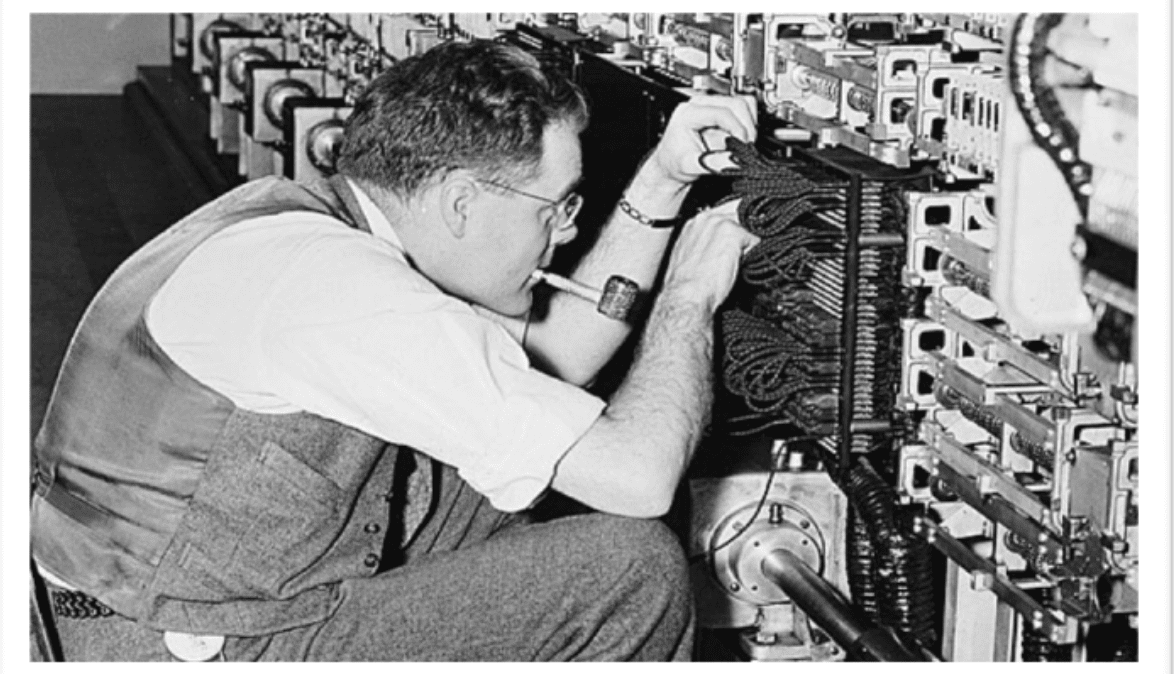

For many years, Manchester was focused not only on the textile industry and trade but also on science and its leaders. Alan Turing is one of the bright representatives of the scientific community of the 20th century. He was an outstanding mathematician, computer scientist and logician who influenced the development of theoretical computer science. It was Turing who formalised the concepts of algorithms and calculations with his invention, which can be considered the prototype of the modern general-purpose computer. He was a genius of his time and became famous in Great Britain for pioneering theoretical computer science and the introduction of artificial intelligence. Learn more at imanchester.info.
Little genius
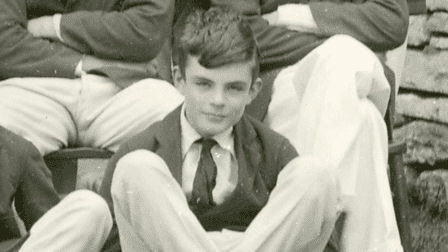
The legendary British mathematician Alan Turing was born in Maida Vale, London, in 1912. Alan’s parents understood that their child was special, he was a genius. As the boy grew up, his intellectual abilities became more and more noticeable.
When Alan started attending school, the teachers were amazed too. He was an incredibly capable child and stood out among other children for his intelligence, interest and hard work.
Still, Alan didn’t show incredible results in all of his subjects. In particular, the boy was very good at mathematics, but art or classics were difficult for him. He just wasn’t interested in them. Therefore, the principal repeatedly informed his parents that Alan should strive for knowledge in all fields and not only in mathematics if he doesn’t want to be solely a scientific specialist.
But Alan didn’t even take into account this remark. He continued to deeply study mathematical sciences, reveal his knowledge in research and solve complex tasks that were difficult for his peers. In addition, at the age of 16, he got interested in the works of the famous physicist and theoretician Albert Einstein. He closely studied and understood them. He even deduced Einstein’s questioning of Newton’s laws of motion.
What made Turing famous?
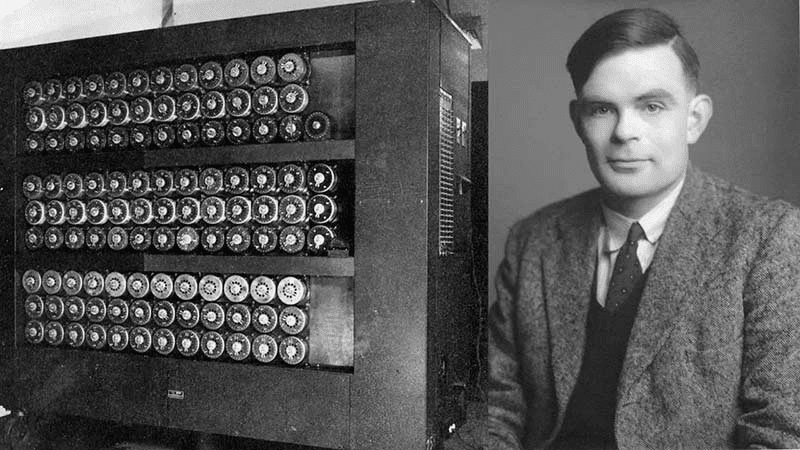
Although Alan Turing wasn’t born in Manchester, he was deeply connected with it. In particular, he studied at the University of Manchester. He also earned a master’s degree from the University of Cambridge and a PhD from Princeton University. But what made Turing really great?
Shortly after Alan earned his PhD in mathematics, World War II began. Then he devoted himself to code-breaking, working at the Government Code and Cypher School at Bletchley Park. During the Second World War, he headed its special department called Hut 8, which was responsible for the cryptanalysis of the German Navy.
His inborn talent and genius in mathematics allowed him to develop an accelerated system for breaking German cyphers. Alan became known thanks to the fact that he managed to improve the Polish bomba method that could find settings for the Nazi Enigma encryption machine. It was Turing who played a decisive role in creating a device capable of intercepting coded messages from the Nazis. Alan’s invention allowed Britain to defeat Germany and its allies in many important battles, including the Battle of the Atlantic. His mathematical developments and calculations became an important contribution to the victory in the Second World War.
After the war was over, Alan continued to work in information technology. In particular, he developed an Automatic Computing Engine. It was one of the world’s first stored-program computer designs. After the end of the war, the mathematician lived in Manchester for a long time. There, he participated in the development of Manchester computers, an innovative series of stored-program electronic devices.
In addition to the creation of Manchester computers, he became very interested in mathematical biology. He wrote several scientific papers, including articles on the chemical basis of morphogenesis. In his work, he predicted the future, namely an oscillating chemical reaction (the Belousov-Zhabotinsky reaction), which was first recorded only in the 1960s.
Despite his genius, many inventions and a huge contribution to the victory over Nazi Germany, Alan didn’t gain due recognition during his lifetime neither in Manchester nor Great Britain. After all, most of his inventions and scientific works were covered by the Official Secrets Act.
Interesting facts about Alan Turing
It would seem that Alan’s life was filled with incredible achievements and career upswings, but everything wasn’t so simple because Turing was gay. For a long time, he had to hide his true feelings, which wasn’t easy. In 1952, Alan was prosecuted for homosexual acts. Instead of serving time in prison, he agreed to another punishment, chemical castration. In two years, in 1954, the British mathematical genius Alan Turing died of cyanide poisoning.
The investigation indicated that Alan committed suicide, although the poisoning could have been an accident. It wasn’t until 2009 that British Prime Minister Gordon Brown issued an official public apology on behalf of the government for the appalling treatment of the British genius. In 2013, Queen Elizabeth II posthumously pardoned Turing.
Turing was a brilliant mathematician and computer scientist. He is considered the father of modern computer science and artificial intelligence. His work in breaking the Enigma code during World War II made a significant contribution to the victory over Germany and had a profound impact on cryptography and computing around the world. His name will remain on the pages of British history forever.