
The 2002 Commonwealth Games, also known as the XVII Commonwealth Games, were a major sporting event that took place in Manchester. The 2002 Commonwealth Games also coincided with the 50th anniversary accession to the throne of Queen Elizabeth II. It undoubtedly added pomp to the celebration. The Commonwealth Games in Manchester were accompanied by fun activities, performances, art exhibitions and other cultural events, notes imanchester.info.
The official mascot of the Commonwealth Games in Manchester was a cat and the budget was estimated at a hefty sum. We offer you to learn more about this significant sporting event for Manchester.
About the Commonwealth Games
The Commonwealth Games are a sporting event, which is second only to the Olympic Games in terms of scale and pomp. These competitions first took place in 1930. The Commonwealth Games are held every four years, and every time, they are hosted by different cities.
It is worth noting that initially the event was called the British Empire Games. It involves athletes representing the countries of the Commonwealth of Nations, an association of states that were part of the British Empire in past centuries.
Most of the sports that are contested at the event are traditional Olympic ones. However, the Commonwealth Games also feature sports typical for the countries of the Commonwealth, such as rugby with seven players in each team, netball and others.
The stadium, which was built especially for the Commonwealth Games
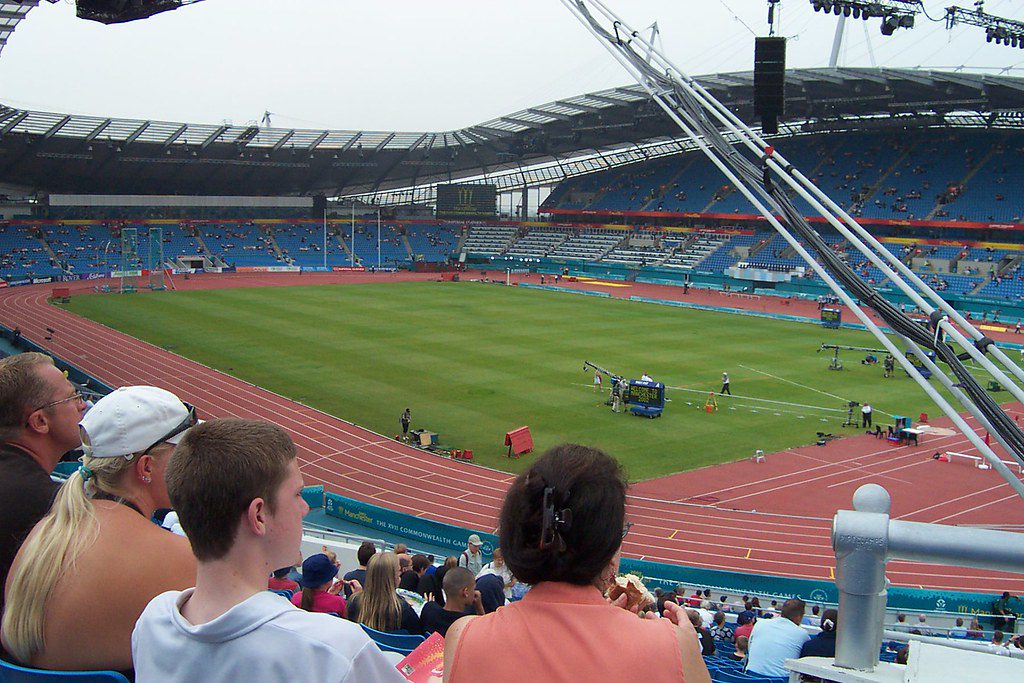
In addition to Manchester, London and Sheffield also submitted an application to host the 2002 Commonwealth Games. However, subsequently, the last of the mentioned cities dropped out of the selection process. Thus, Manchester’s only rival remained London, which had already had the experience of hosting the Commonwealth Games as well as the Olympic Games.
In the end, Manchester did win. In November 1995, Manchester was announced as the host city of the 2002 Commonwealth Games.
Obviously, the authorities took care of the construction of the necessary infrastructure to hold that sports event at the proper level. In addition, it coincided with the 50th anniversary of the accession to the throne of Queen Elizabeth II. The City of Manchester Stadium, which could accommodate more than 40,000 spectators, was built specifically for that purpose. After the competitions, it was reconstructed and leased to the famous Manchester City F.C.
The Manchester Aquatics Centre was built in the city especially for the 2002 Commonwealth Games as well. The National Squash Centre became another sports facility, which was built for holding the above-mentioned event.
Probably, many would wonder about the budget. Thus, it should be noted that the 2002 Commonwealth Games cost £300 million.
How did it go?
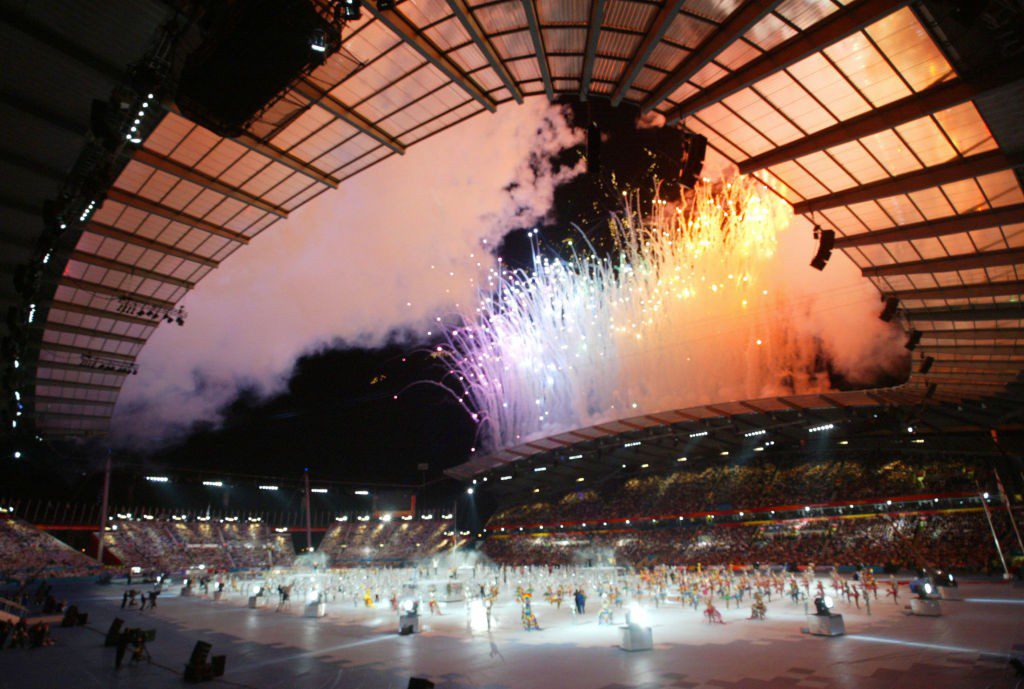
Traditionally, the 2002 Commonwealth Games began with a striking opening ceremony, which was accompanied by dances, music, performances, fireworks and the appearance of famous sports stars on the stage. All the present gladly greeted Queen Elizabeth II. She gave a speech and declared the XVII Commonwealth Games open.
73 countries, territories and regions of the Commonwealth of Nations participated in the competition hosted by Manchester. Sports competitions were held in 17 sports, such as water sports, athletics, badminton, boxing, hockey, judo, netball, rugby sevens, weightlifting, triathlon, shooting, squash and others.
Some athletes even set world records in their disciplines during the competitions.
A cat was chosen as the mascot of the Commonwealth Games in Manchester. It symbolises the characteristic features of the host city, which is energetic, dynamic and friendly.
The 2002 Commonwealth Games lasted from July 25 to August 4, 2002. The closing ceremony took place after the competitions were over. It was no less spectacular than the grand opening. During the ceremony, Queen Elizabeth II announced the closure of the competition in front of a crowd of almost 40,000 spectators at the City of Manchester Stadium.
The closing ceremony was accompanied by music, performances, fireworks, balloons released into the sky and the transfer of the ceremonial flag of the Commonwealth Games to the next host city, Melbourne. It was also accompanied by rainy weather. However, it in no way overshadowed the bright finale of the XVII Commonwealth Games, which became a significant page in the sports history of Manchester.