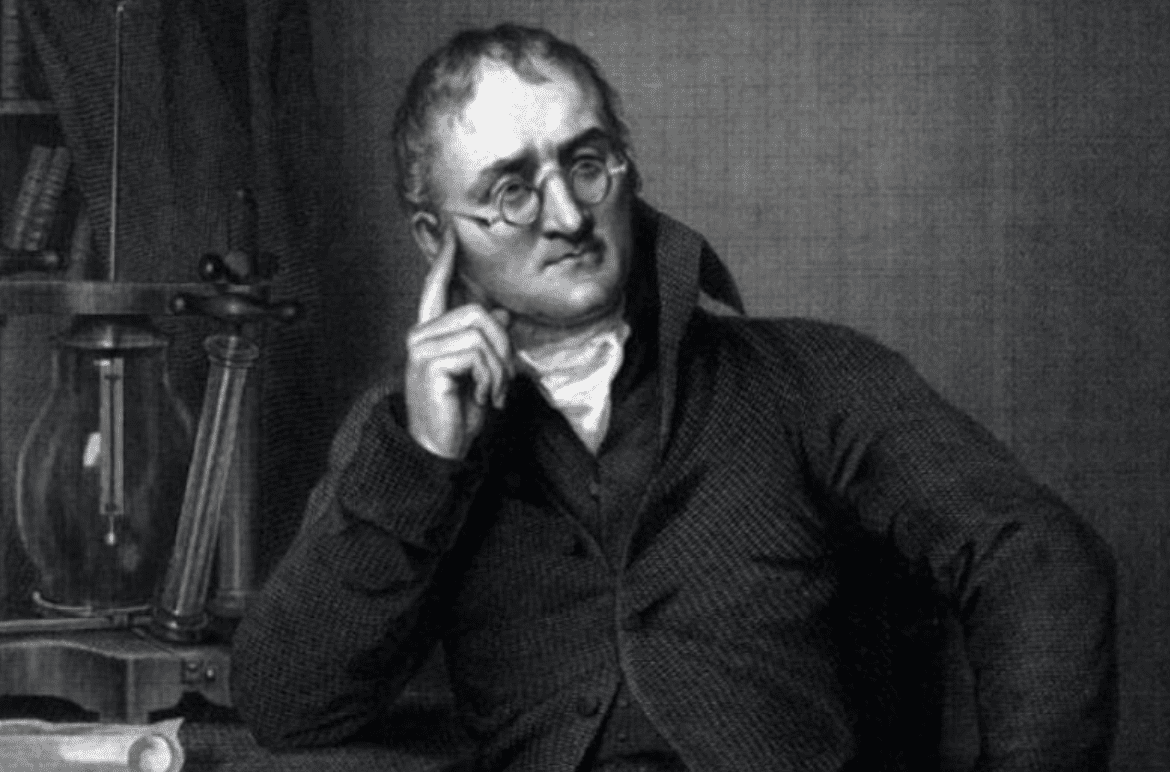

John Dalton is a famous British chemist, physicist and meteorologist. He achieved worldwide fame because he introduced the atomic theory into chemistry. It gave humanity a new fundamental understanding of matter and its composition. Dalton’s atomic theory ushered in a new era in the modern study of chemistry. In addition, Dalton devoted most of his life to the study of colour blindness, the disease he suffered from. Learn more at imanchester.info.
Early years and career
John Dalton was born into a family of a Quaker and weaver in Eaglesfield in 1766. They lived in hard times and thus in poverty. Sometimes, they didn’t even have enough money to buy food.
Therefore, the family couldn’t support Dalton for a long time and he had to earn a living on his own at the age of nine. He received his first education from his Quaker father and after some time was apprenticed to another Quaker named Fletcher. He was a successful person and managed a private school.
At the age of 15, Dalton already managed a Quaker school in Kendal. At the age of 20, he thought about obtaining a full-fledged education in law or even medicine. However, his relatives didn’t approve of his intentions. Perhaps, the reason was the fact that Dalton was a dissident and it was forbidden for such people to study in British universities. But it didn’t stop Dalton. He was looking for some ways and opportunities to get the necessary knowledge. A lot of important knowledge was given to him by the blind philosopher John Gough.
Dalton stood out among the others. He was interested in various sciences and research. Therefore, he grasped all the material quickly and easily. At the age of 27, he moved to Manchester, where he was appointed a teacher of mathematics and natural philosophy at the local academy (Harris Manchester College in Oxford).
Dalton devoted seven long years to the Manchester Academy until he was fired due to lack of funding. After that, he began his new career as a tutor.
Meteorology in John Dalton’s life
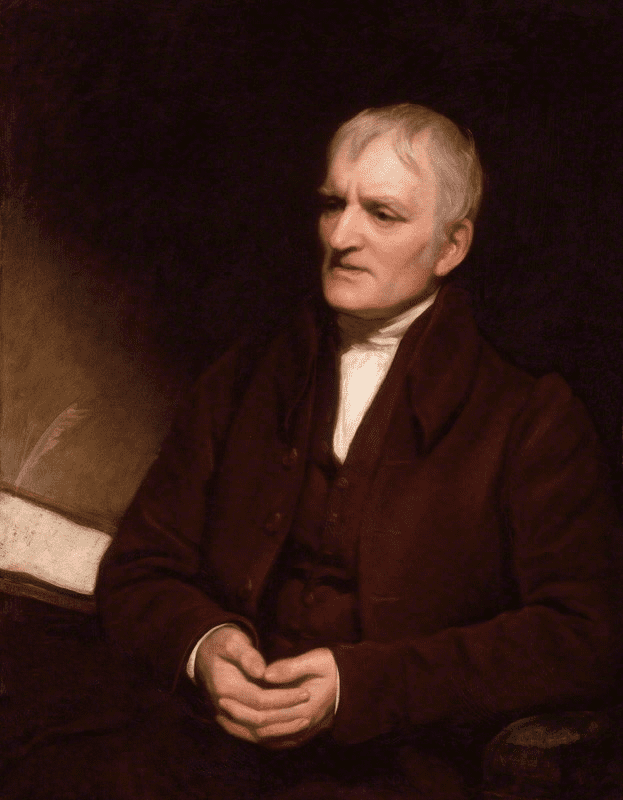
Meteorology occupied an important place in Dalton’s life. A Quaker manufacturer of various devices and a meteorologist, Robinson, instilled an interest in it in young John.
Dalton was incredibly passionate about meteorology. He conducted his own research and observations, recorded them, proposed solutions to various problems and sought answers to complex questions. During his 57 years of life, he made more than 200,000 different meteorological observations in his diary. Dalton also rediscovered the theory of atmospheric circulation. He also published various publications about his discoveries and meteorological research.
Dalton often walked on hills while studying meteorology. The reason was the fact that before the advent of aeroplanes and weather probes, the only way to measure temperature and humidity was to climb a mountain. Dalton did all of this in the Lake District.
Daltonism, colour blindness
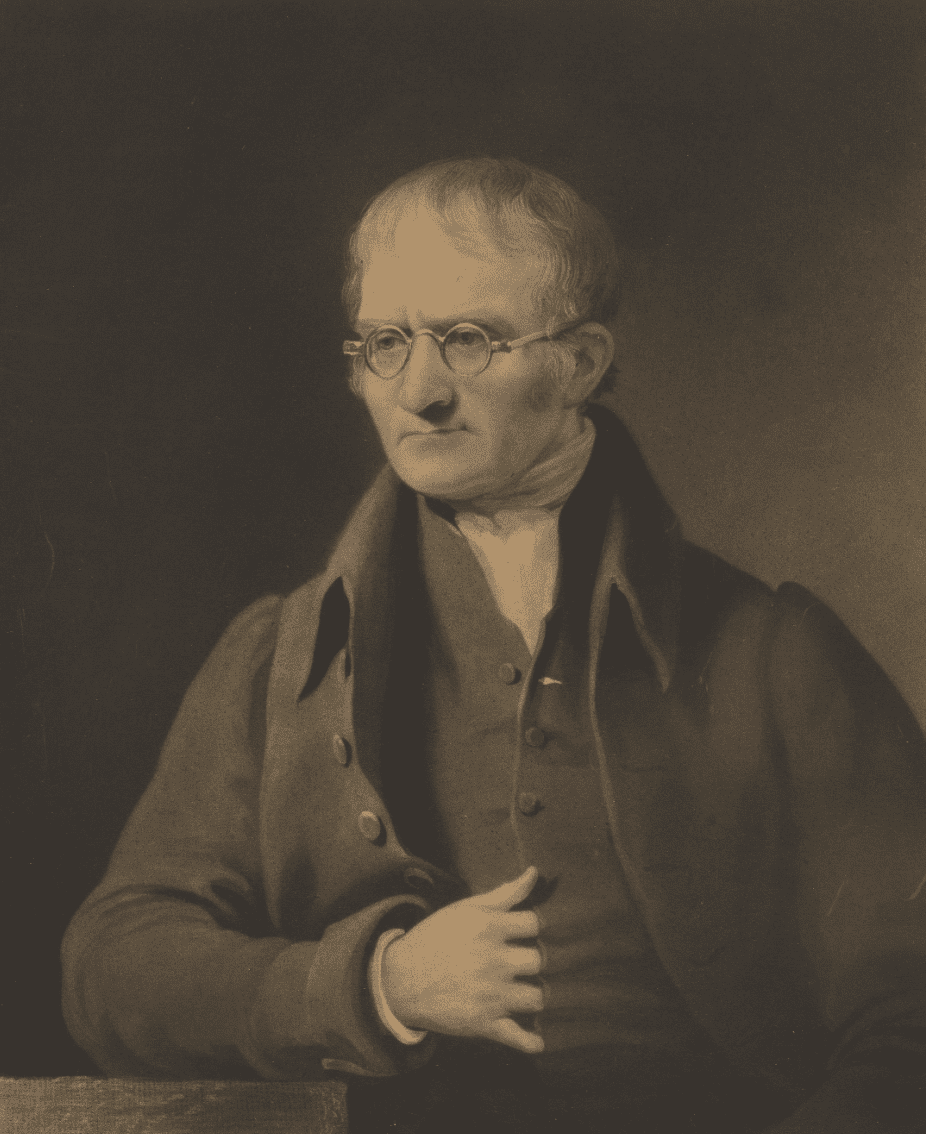
It should be noted that from a young age, Dalton suffered from a congenital defect of colour blindness, as it was called in the 18th and 19th centuries. His illness was one of the reasons why he wanted to get a medical education at the age of 20. Dalton conducted many experiments and studies with vision. As a result, he published an article Extraordinary facts relating to the vision of colours, in which he suggested that the deficiency of colour perception was caused by a change in the colour of the liquid medium in the eyeball. His brother also suffered from colour blindness, so John assumed that most likely it was a hereditary disease.
At first, this theory was rejected and his contribution was recognised only after his death.
Dalton’s atomic theory
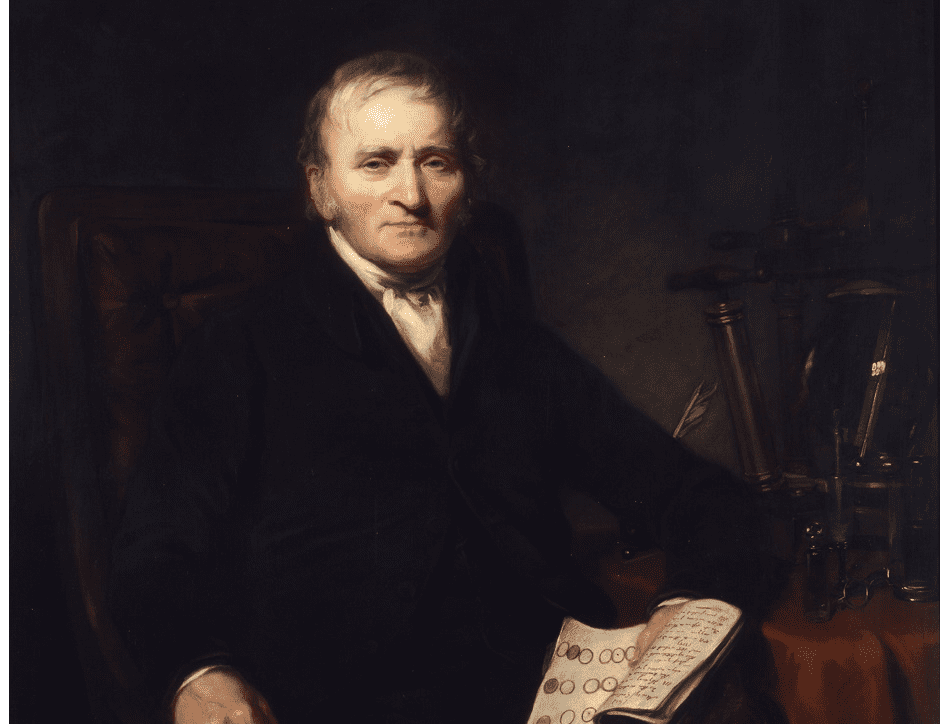
In Manchester, John Dalton also deeply studied the concept of atoms. However, for him, it wasn’t a scientifically based idea and more of a philosophical one.
Dalton’s atomic theory includes such principles as
- Matter consists of tiny indivisible particles called atoms.
- All atoms of one element have the same mass and properties.
- Atoms of different elements have different masses and properties.
- Atoms can’t be created or destroyed.
- Compounds are formed when atoms of different elements combine in simple whole-number ratios. It explained the fixed composition of compounds and gave rise to chemical formulas.
Dalton’s atomic theory was revolutionary, as it provided a systematic basis for understanding chemical reactions, the composition of compounds and the interaction between different elements. It also led to the creation of the periodic table as well as the development of chemical nomenclature and formulas.
Dalton suffered three strokes and developed a speech impediment, but despite everything, he continued to conduct various research and experiments until the end of his life. In 1844, Dalton had another heart attack while recording his last meteorological observations. He fell out of bed and died.
Dalton made a huge contribution to the development of science not only in Manchester but also in the whole of Great Britain. More than 40,000 people came to his funeral and his body lay in Manchester Town Hall for four days.